
SUMMARY
- Modern auto body shops use computerized color-matching technology, factory paint codes, and skilled refinishing techniques to achieve accurate paint matches.
- Paint matching involves more than simply using the vehicle’s paint code because age, sunlight, and weather can change the original finish over time.
- Professional refinishing includes careful preparation, blending, and quality inspections to produce a seamless appearance.
- Experienced technicians evaluate multiple factors before applying new paint to repaired panels.
- Understanding the paint matching process helps vehicle owners appreciate the precision involved in restoring their vehicle after a collision.
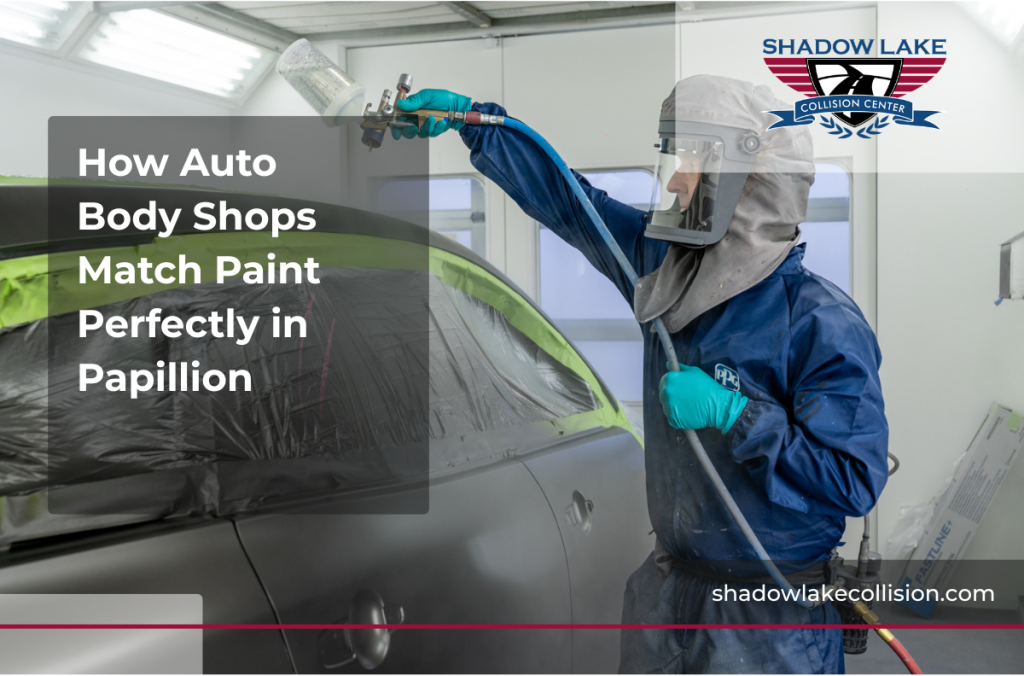
After a collision, many vehicle owners worry that a repaired panel won’t match the rest of the vehicle. It’s a common concern, especially if the damage affects highly visible areas such as the hood, doors, fenders, or quarter panels. Fortunately, modern collision repair facilities use advanced technology and proven refinishing techniques to produce repairs that blend naturally with the original finish.
Paint matching has become far more sophisticated than simply ordering paint by color name. Today’s technicians combine computerized color analysis, manufacturer paint information, and years of refinishing experience to account for factors such as paint aging, sun exposure, and normal wear. The goal is to restore the repaired area so it closely matches the surrounding panels while maintaining the vehicle’s overall appearance.
For drivers in Papillion, understanding how professional paint matching works can provide confidence that quality collision repairs focus on both appearance and long-term durability.
Why Isn’t Matching Automotive Paint as Simple as Using the Paint Code?
Every vehicle leaves the factory with a designated paint code, but that code is only the starting point for achieving an accurate color match.
Several factors can influence how a vehicle’s paint appears over time, including:
- Sun exposure
- Weather conditions
- Oxidation
- Vehicle age
- Previous repairs
- Environmental contaminants
Because of these variables, two vehicles with the same factory paint code may no longer look exactly alike after years of regular use.
Rather than relying solely on the factory paint code, technicians combine digital color analysis with visual evaluation to identify the closest possible match. During the auto body repair process, refinishing specialists evaluate the condition of the surrounding panels before determining the most appropriate color formula.
According to the Automotive Service Association (ASA), proper refinishing techniques play an important role in restoring both the appearance and long-term protection of repaired vehicles.
How Do Auto Body Shops Match Paint So Accurately?
Modern collision repair facilities use specialized tools and technology to improve color accuracy.
The paint matching process may include:
- Factory paint code verification
- Computerized color analysis
- Digital color mixing
- Spray-out test panels
- Visual color comparison
- Formula adjustments
Instead of relying on a single formula, technicians often make small adjustments after comparing the test panel with the surrounding vehicle under different lighting conditions.
The National Institute for Automotive Service Excellence (ASE) emphasizes the importance of proper refinishing procedures and skilled technicians in professional automotive repairs.
Why Is Surface Preparation So Important Before Painting?
Even the most accurate paint color cannot produce quality results without proper surface preparation.
Before refinishing begins, technicians typically perform:
- Cleaning
- Sanding
- Dent repair verification
- Primer application
- Surface leveling
- Final surface inspection
Each step helps create a smooth, stable surface that allows the paint to bond correctly and produce a consistent finish.
Preparing the repaired area carefully also helps improve the durability of the finish, reducing the likelihood of peeling, bubbling, or premature paint failure later.
Surface preparation is the foundation of a successful refinishing job because even the highest-quality automotive paint cannot hide imperfections underneath it. Small dents, scratches, sanding marks, or surface contaminants can become much more noticeable after the paint has been applied if they are not addressed beforehand.
Technicians carefully inspect the repaired panel throughout the preparation process to ensure it is smooth, properly shaped, and ready to receive primer and paint. Taking the time to complete these steps correctly helps create a finish that looks uniform from every viewing angle.
Proper preparation also plays an important role in protecting the repaired panel over the long term. Removing dirt, grease, wax, and other contaminants allows the primer and paint to adhere as intended, creating a strong bond with the surface.
Primer helps seal the repaired area while providing a stable base for the color coat, improving both appearance and durability. Once the surface has been leveled and inspected, technicians can begin the refinishing process with greater confidence that the finished result will meet quality standards.
Every stage of surface preparation contributes to the final result, from ensuring smooth panel contours to promoting proper paint adhesion. According to the Automotive Service Association (ASA), careful preparation and refinishing procedures are essential for producing durable, professional-quality repairs that restore both the appearance and protective finish of the vehicle.
What Is Paint Blending and Why Is It Sometimes Necessary?
In many cases, technicians do not repaint only the damaged panel.
Instead, they may blend the new paint into adjacent panels by:
- Extending the color into neighboring panels
- Gradually fading the new color
- Matching metallic or pearl effects
- Maintaining consistent gloss
- Creating a seamless transition
- Reducing noticeable color differences
Blending helps minimize visual differences between newly refinished panels and the existing factory finish, particularly on metallic and pearl colors.
Throughout the paint and collision repair process, technicians evaluate whether blending will produce the most natural-looking repair based on the vehicle’s condition and manufacturer refinishing recommendations.
The Society of Collision Repair Specialists (SCRS) explains that proper refinishing techniques contribute to overall repair quality and customer satisfaction.
How Do Technicians Make Sure the Paint Matches Before Delivery?
Quality control is an essential part of every refinishing project.
Before returning the vehicle, technicians may inspect:
- Color consistency
- Gloss level
- Surface texture
- Panel transitions
- Finish quality
- Overall appearance
The repaired areas are often examined under multiple lighting conditions because paint can appear different in sunlight, shade, or indoor lighting.
These final inspections help confirm that the repaired finish blends naturally with the surrounding panels before the vehicle is delivered to the customer.
The final inspection is much more than a quick visual check. Technicians carefully review the repaired areas from multiple angles to ensure the color blends smoothly with the adjacent panels and that there are no noticeable differences in gloss, texture, or finish. They may also inspect the vehicle both indoors and outdoors because natural sunlight, fluorescent lighting, and shaded conditions can each reveal subtle variations in color that might not be visible under a single light source. This thorough evaluation helps ensure the refinished panel maintains a consistent appearance in a variety of real-world conditions.
In addition to evaluating the paint itself, technicians verify that surrounding body panels are properly aligned and that trim pieces, moldings, weatherstripping, and other exterior components have been correctly reinstalled after the refinishing process. Any dust particles, minor imperfections, or surface irregularities identified during the inspection can often be corrected through polishing or additional finishing work before the vehicle is returned to the customer. This attention to detail helps produce a cleaner, more professional result that meets the repair facility’s quality standards.
Throughout the collision repair process, quality control remains an important part of every stage, including the final refinishing inspection.
Rather than assuming the repair is complete once the paint has cured, technicians perform these final checks to confirm the repaired area meets expectations for appearance, durability, and workmanship.
According to the Inter-Industry Conference on Auto Collision Repair (I-CAR), following proper refinishing procedures and conducting thorough final inspections are important steps in delivering consistent, high-quality collision repairs.
Can Modern Technology Improve Paint Matching?
Technology has significantly improved the refinishing process, but skilled technicians remain just as important.
Today’s repair facilities may use:
- Digital spectrophotometers
- Computerized mixing systems
- Manufacturer color databases
- Controlled paint booths
- Precision spray equipment
- Digital quality control processes
While advanced technology improves accuracy, technicians still rely on their experience to make fine adjustments that produce the best possible match for each individual vehicle.
According to Axalta, refinishing professionals combine digital color tools with visual evaluation to achieve accurate color matches across a wide range of vehicle finishes.
Why Should You Choose an Experienced Auto Body Shop for Paint Repairs?
Quality paint matching requires much more than selecting the correct color formula. Experience, proper preparation, advanced equipment, and attention to detail all contribute to the finished result.
When choosing an auto body shop, look for:
- Experienced refinishing technicians
- Modern paint matching technology
- OEM-focused repair procedures
- Quality control inspections
- Clear communication
- Strong customer reputation
Drivers can also learn more about Shadow Lake Collision and the company’s commitment to precision refinishing, quality workmanship, and customer-focused collision repairs.
The Inter-Industry Conference on Auto Collision Repair (I-CAR) emphasizes the importance of following proper repair and refinishing procedures to support consistent, high-quality repairs.
Frequently Asked Questions
Why doesn’t the factory paint code always produce a perfect match?
Paint naturally changes over time due to sunlight, weather exposure, and aging, so technicians often make additional adjustments beyond the factory paint code.
What is computerized color matching?
It uses specialized equipment to analyze the vehicle’s existing finish and help technicians identify the closest available paint formula.
Why do body shops blend paint into adjacent panels?
Blending creates a smoother transition between the repaired area and the existing finish, reducing visible color differences.
Can metallic and pearl paints be matched?
Yes. These finishes require additional care and refinishing expertise, but modern equipment and experienced technicians can achieve highly accurate results.
How do technicians inspect paint quality?
They evaluate the finish under different lighting conditions while checking color consistency, gloss, texture, and overall appearance.
Does proper preparation affect the final paint finish?
Absolutely. Cleaning, sanding, priming, and surface preparation are essential for achieving a durable, professional-quality finish.
Why choose Shadow Lake Collision?
Shadow Lake Collision combines experienced refinishing technicians, advanced paint-matching technology, OEM-focused repair procedures, and comprehensive quality inspections to restore your vehicle’s appearance with precision.
Looking for Expert Auto Paint Repair in Papillion?
Professional paint matching is a detailed process that combines advanced technology, manufacturer refinishing information, and experienced craftsmanship. From preparing the repaired surface to blending adjacent panels and performing final quality inspections, every step helps ensure the repaired area blends naturally with your vehicle’s existing finish. Choosing an experienced collision repair facility gives you confidence that your vehicle will leave looking its best.
If your vehicle needs professional paint repair after an accident, visit Shadow Lake Collision at 1215 Applewood Dr, Papillion, NE 68046, United States. Our experienced team uses advanced refinishing technology, proven repair procedures, and careful quality inspections to restore your vehicle with exceptional attention to detail.

