
SUMMARY
- Stay calm and check for injuries immediately after a rear-end collision.
- Move to a safe location if your vehicle can be driven safely.
- Contact law enforcement and report the accident when appropriate.
- Exchange insurance and contact information with the other driver.
- Take photographs of the vehicles, road conditions, and damage.
- Even low-speed rear-end collisions can cause hidden structural or mechanical damage.
- Have your vehicle professionally inspected before assuming the damage is only cosmetic.
- Shadow Lake Collision helps drivers in Omaha, NE restore their vehicles safely after rear-end accidents.
Rear-end collisions are among the most common types of traffic accidents in the United States. Whether they occur in stop-and-go traffic, at an intersection, or on the interstate, these accidents often happen with little warning. While some rear-end collisions result in only minor bumper damage, others can cause significant structural, mechanical, or safety system damage that is not immediately visible.
Knowing what to do after a rear-end collision can help protect your health, preserve important evidence, and make the insurance and repair process much easier. For drivers throughout Omaha, NE, taking the right steps immediately after an accident can reduce stress and help ensure your vehicle is repaired properly.
Check for Injuries First
Your first priority should always be safety.
Immediately after the collision:
- Check yourself for injuries.
- Check your passengers.
- Call 911 if anyone appears injured.
- Turn on your hazard lights.
- Move to a safe location if the vehicle can be driven safely.
Never ignore neck, back, or head pain, even if symptoms seem minor immediately after the collision.
According to the National Highway Traffic Safety Administration, protecting people from additional harm should always be the first priority following any traffic accident.
Contact Law Enforcement
Even if the collision appears minor, contacting local law enforcement is often beneficial.
Officers may:
- Secure the scene
- Document the accident
- Collect driver information
- Interview witnesses
- Prepare an official crash report
The police report can become an important document during the insurance claims process.
Exchange Information
After everyone is safe, exchange information with the other driver.
Collect:
- Driver’s name
- Phone number
- Driver’s license information
- Insurance information
- Vehicle registration
- License plate number
If there are witnesses, ask for their contact information as well.
Document the Accident Scene
Photographs provide valuable documentation after any collision.
Take pictures of:
- Vehicle damage
- License plates
- Road conditions
- Traffic signals
- Skid marks
- Debris
- The surrounding area
The more documentation you gather, the easier it may be to explain what happened during the claims process.
Notify Your Insurance Company
Report the accident as soon as possible.
Be prepared to provide:
- Date and time
- Location
- Driver information
- Police report information
- Photos
- Description of the accident
Prompt reporting allows the claims process to begin while details remain fresh.
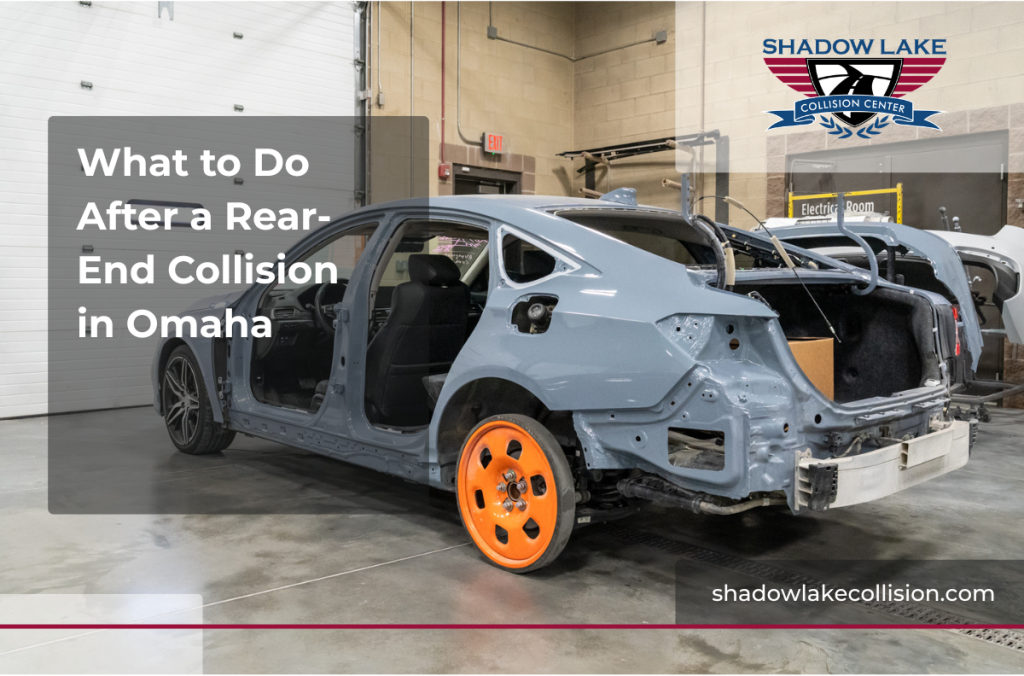
Don’t Assume the Damage Is Minor
Rear bumpers are designed to absorb impact energy.
However, even relatively low-speed collisions can damage:
- Bumper reinforcements
- Crash absorbers
- Mounting brackets
- Frame components
- Parking sensors
- Cooling systems
Many drivers seeking professional collision repair services discover that hidden damage extends well beyond the visible dent or cracked bumper.
A professional inspection helps identify these issues before repairs begin.
Modern Vehicles Require More Than Cosmetic Repairs
Today’s vehicles include sophisticated safety systems that may be affected during a rear-end collision.
Repairs may involve:
- Diagnostic scans
- Structural inspections
- Sensor verification
- Paint refinishing
- Quality control inspections
Many newer vehicles also contain parking sensors, blind spot monitoring systems, and rear cameras that should be inspected following an impact.
According to the Insurance Institute for Highway Safety, proper collision repairs help preserve the crashworthiness and safety performance built into modern vehicles.
In addition to repairing visible damage, technicians must evaluate how the collision affected the vehicle’s electronic systems and structural components. Even a relatively minor rear-end impact can shift sensors, damage mounting brackets, or affect the alignment of components that support advanced driver assistance systems. If these systems are not inspected and restored correctly, they may not perform as intended when you need them most.
Professional collision repair facilities use specialized diagnostic equipment to identify fault codes and verify that important vehicle systems are operating properly. Depending on the extent of the damage, technicians may also perform structural measurements, inspect suspension components, and verify that replacement parts have been installed according to manufacturer recommendations. These additional procedures help ensure the repair addresses both visible and hidden damage rather than focusing only on the vehicle’s appearance.
For drivers in Omaha, NE, choosing a repair facility that understands today’s advanced vehicle technology is an important part of restoring both safety and confidence after an accident. Shadow Lake Collision follows a comprehensive repair process that includes detailed inspections, careful quality control, and clear communication throughout every stage of the repair. By combining modern repair technology with experienced technicians and customer-focused service, the team helps ensure every vehicle is restored with the attention to detail necessary for today’s increasingly sophisticated vehicles.
Why Choosing the Right Repair Shop Matters
After an accident, you may receive several repair recommendations.
Instead of focusing only on convenience, ask questions such as:
- How will hidden damage be identified?
- Will diagnostic scans be performed?
- How is repair quality verified?
- Will I receive repair updates?
- Are manufacturer repair procedures followed?
Drivers looking for trusted auto body repair services should evaluate technician experience, communication, repair quality, and customer service before selecting a repair facility.
According to Consumer Reports, choosing a repair shop based on qualifications, transparency, and workmanship often leads to better long-term repair outcomes.
The I-CAR organization also emphasizes continuing technician education as vehicle technology continues to evolve.
Common Mistakes to Avoid
Following a rear-end collision, avoid these common mistakes:
- Driving away without documenting the damage.
- Assuming the vehicle is safe because it still drives.
- Delaying notification to your insurance company.
- Ignoring warning lights.
- Skipping a professional inspection.
Taking a few extra steps immediately after the accident can help prevent larger repair issues later.
Another common mistake is accepting that the damage is “only cosmetic” without having the vehicle inspected by a professional. Modern bumpers are designed to absorb impact energy, which means important components hidden behind the bumper cover may be damaged even when the exterior appears relatively minor. Sensors, bumper reinforcements, mounting brackets, and structural components can all be affected without obvious visible signs.
Drivers should also avoid delaying repairs simply because the vehicle seems to drive normally. Problems involving wheel alignment, suspension, steering, or advanced driver assistance systems may not become noticeable until days or even weeks after the accident. Continuing to drive with hidden damage could lead to additional wear, reduced vehicle performance, or more expensive repairs in the future.
Another mistake is failing to keep copies of important documents such as photographs, repair estimates, insurance correspondence, and the police report. Organized documentation can simplify the insurance claims process and make it easier to address questions that arise during repairs.
For drivers in Omaha, NE, taking the proper steps immediately after a rear-end collision can save both time and frustration. Shadow Lake Collision encourages customers to schedule a professional inspection as soon as possible after an accident, even if the damage appears minor. By identifying hidden damage early and explaining the recommended repairs, the team helps ensure every vehicle is restored safely, accurately, and according to high repair standards.
Frequently Asked Questions
1. Should I call the police after a rear-end collision?
Yes. Even if the accident appears minor, an official report can be helpful during the insurance claims process.
2. Can a low-speed rear-end collision cause hidden damage?
Absolutely. Components behind the bumper, including sensors and structural supports, may be damaged even if exterior damage appears minimal.
3. Should I drive my vehicle after the accident?
Only if it appears safe to operate. If you are unsure, have the vehicle inspected before driving further.
4. What information should I collect after the accident?
Exchange driver, insurance, and vehicle information, and document the scene with photographs.
5. Why do repair estimates sometimes increase?
Hidden damage is often discovered after technicians begin disassembling the vehicle.
6. Should I have my vehicle inspected even if the bumper only has a scratch?
Yes. Professional inspections can identify structural or mechanical damage hidden behind the bumper.
7. Why is communication important during repairs?
Regular updates help customers understand repair progress, insurance approvals, and expected completion timelines.
8. Why choose Shadow Lake Collision?
Shadow Lake Collision provides professional collision repair, thorough inspections, and customer-focused service to help Omaha drivers return to the road with confidence.
Conclusion
Rear-end collisions can happen in an instant, but the decisions you make afterward can have a lasting impact on your safety, insurance claim, and vehicle repairs. By checking for injuries, documenting the accident, notifying your insurance company, and scheduling a professional inspection, you can help ensure hidden damage is identified and repaired correctly. Even seemingly minor impacts deserve careful evaluation because today’s vehicles contain advanced structural components and safety technology that may be affected by the collision.
If you’ve been involved in a rear-end collision in Omaha, NE, Shadow Lake Collision is committed to providing honest communication, professional inspections, and high-quality collision repairs.
Visit 4040 S 84th St, Omaha, NE 68127, United States, to speak with the team, schedule an inspection, or request an estimate to help restore your vehicle safely and professionally.

